



A recent report in the Washington Post makes serious allegations against the US and, at the same time, raises important questions about the future of support for Ukraine.
According to the US newspaper, the Pentagon has informed the Congress that it intends to use around $750 million – funds provided by various NATO countries under the PURL programme – to replenish its own military stocks, rather than providing additional military assistance to Ukraine as agreed.
These are allegations that can essentially be described as nothing less than the misuse of funds. But is there any truth in them?
According to various statements from German government and ministry representatives, the answer is no. Over the course of yesterday, Germany’s Minister of Defence Boris Pistorius, Government Spokesperson Stefan Kornelius and a spokesperson for the Federal Ministry of Defence all commented on the matter, in some cases clearly refuting the report.
No indication that the report is accurate
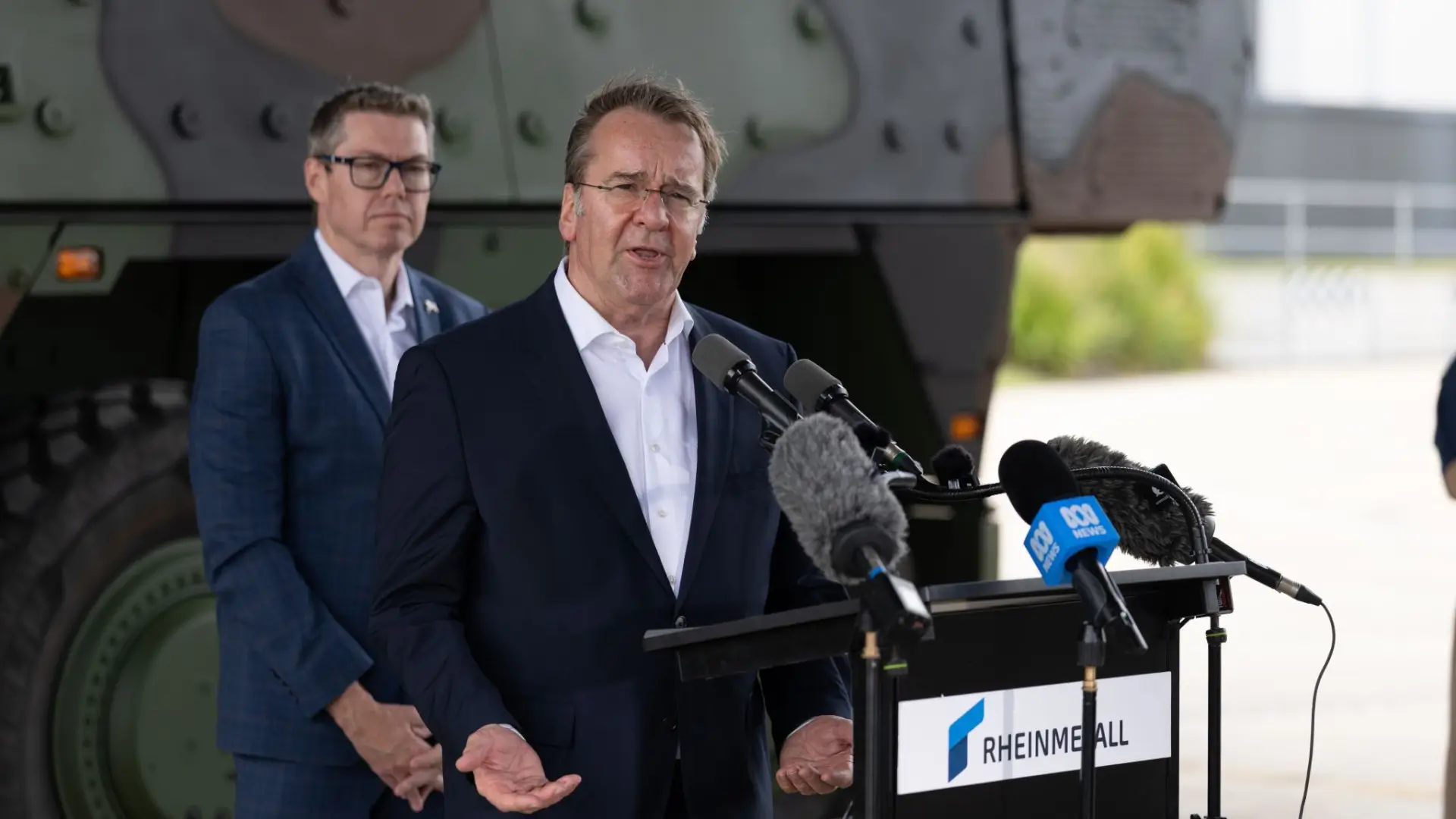
Pistorius, who commented on the matter whilst in Australia during his Indo-Pacific tour, expressed scepticism, pointing out that the newspaper was relying solely on unnamed sources and stated, “we’ll have to wait and see what comes of it”.
However, this is currently nothing more than “hearsay” and neither could he confirm that this applies to Germany’s previous participations in the PURL programme, nor is there any indication whatsoever that this might be the case in the future.
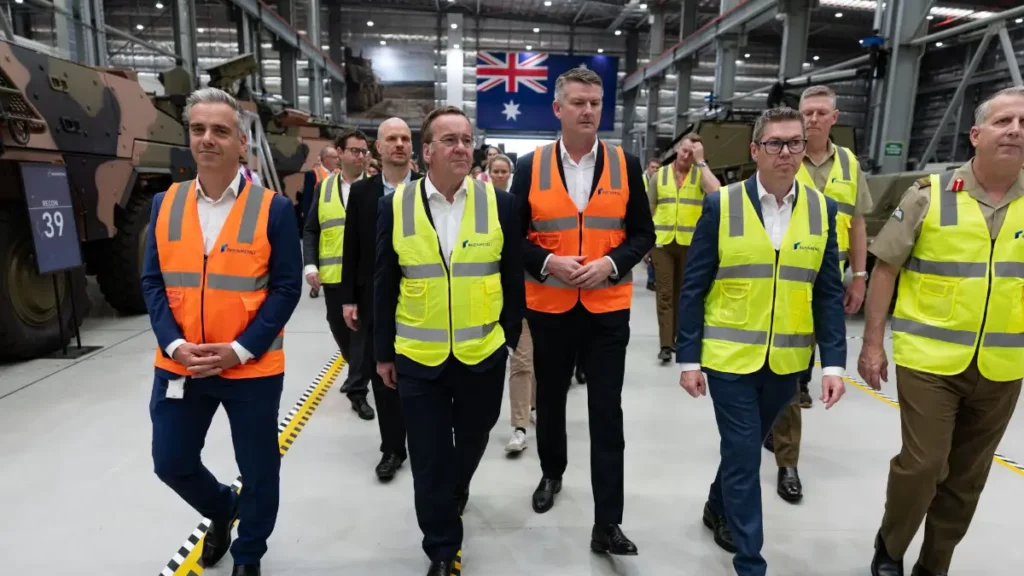
German officials made similar comments at yesterday’s government press conference in Berlin, more than 15,000 kilometres away.
According to government spokesperson Stefan Kornelius, the government has “no information of its own” regarding this report. Furthermore, a spokesperson for the Federal Ministry of Defence stated that there is no evidence to suggest that anything is not proceeding as agreed, nor are there any indications to that effect.
However, a key point is that, according to the Ministry of Defence, regular updates are provided on the status of deliveries. It can therefore be assumed that, in the event of misuse of the funds, this would be noticed relatively quickly and appropriate action would be taken.
Misinterpretation reason for the report?
Could this therefore be a misinterpretation, and is it actually “merely” a case of the US intending to postpone deliveries originally intended for Ukraine in order to meet its own needs first?
The US certainly has the right to do so. According to Colby Badhwar, an analyst at The Insider, the US government directly or indirectly controls the delivery schedule for every arms sale.
Whilst this would still have a huge (negative) impact on Ukraine, it would seem less serious by comparison, as the US weapons would ultimately be delivered after all.
Although this would certainly be viewed very negatively in this case, the fact that the US has this right under its own regulations also does have its advantages, from which Ukraine has indeed benefited in the past.
As military analyst “Jeff” pointed out yesterday on X (formerly known as Twitter), the US used the same framework last year to reprioritise the delivery of newly manufactured MIM-104 Patriot fire units in order to provide additional aid to Ukraine.
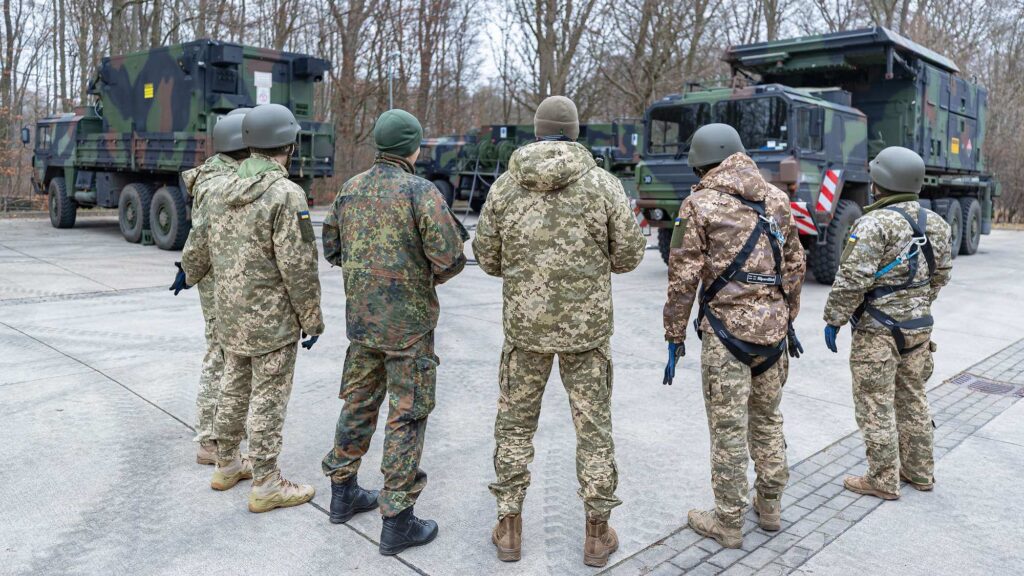
As a result of the reprioritisation of deliveries, Germany moved to the top of the list, which enabled the German government, as a direct consequence, to supply Ukraine with two complete fire units from Bundeswehr stocks.
According to Badhwar, Ukraine has also benefited from this arrangement in other instances. For example, the US government has also prioritised the delivery of PAC-3 MSE and AMRAAM missiles to Ukraine.
In fact, other countries have also implemented similar mechanisms. Germany, for example, has prioritised Ukraine over not only its own military but also Egypt and Estonia when it came to supplying IRIS-T SLM fire units. In both cases, however, this was done with the consent of the respective other country’s government.
PURL remains irreplaceable
Regardless of the critical reporting, it is clear that the PURL programme remains essential for Ukraine’s survival. After US President Donald Trump effectively declared additional US bilateral aid to Ukraine null and void last year and rightfully called for a greater commitment from European nations, the US and NATO agreed on the PURL initiative shortly afterwards.
Under this initiative, European NATO members in particular, but also countries such as Canada and Australia, are to provide funding to procure military equipment in the US that Ukraine urgently needs for its defence against the Russian aggressor.
This mainly involves the supply of ammunition for various air defence systems, such as the MIM-104 Patriot, which is essential for protecting Ukraine against ballistic missiles, as well as spare parts and other equipment.
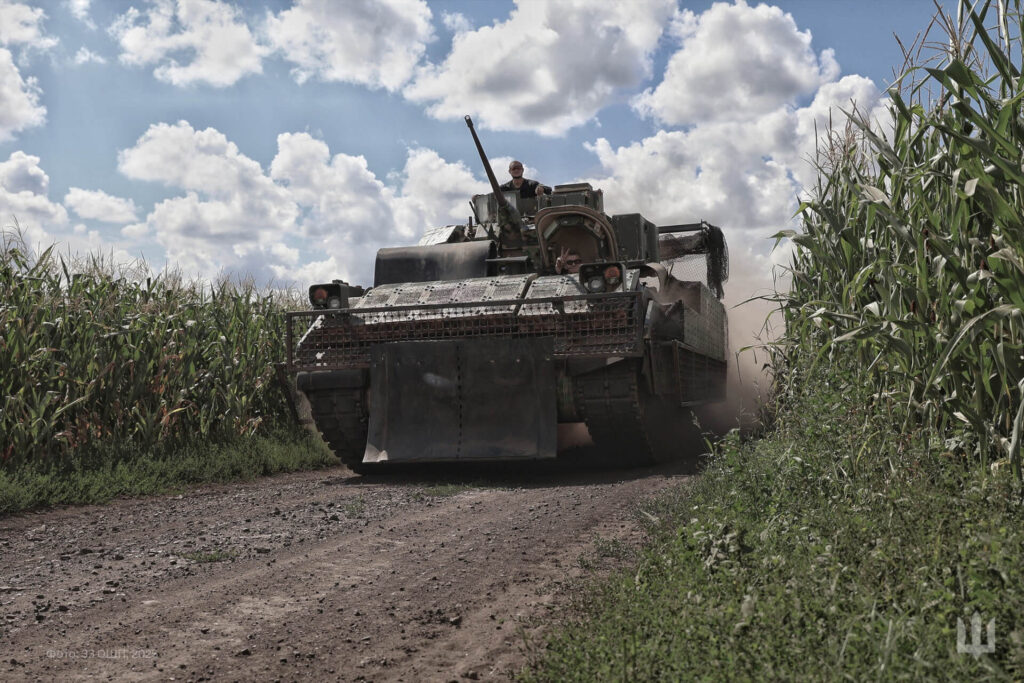
Everything is coordinated directly by and through NATO. What the Ukrainian army needs and in what quantities is agreed between Ukraine and NATO. Members wishing to finance these military assets for Ukraine then pay their respective contributions into a central NATO account.
NATO then coordinates the relevant payments and deliveries with the US and provides regular updates on the current status to the respective donors.
Germany contributed $700 million
Last year alone, pledges totalling more than $4 billion were made. As a spokesperson for the German Ministry of Defence told GAU in response to an enquiry, Germany’s share amounts to $700 million.
These funds were used to finance the fourth package, worth $500 million, in full, whilst package seven – in which Norway and Poland also participated – and package eight – in which Norway and the Netherlands participated – were financed partially, with $150 million and $50 million respectively.
Thanks to the provision of these funds by the German government, the US has so far supplied Ukraine with, among other things, air defence systems, ammunition for the Ukrainian MIM-104 Patriot fire units, radar systems, ammunition for the HIMARS and M270 MLRS, and other ammunition.
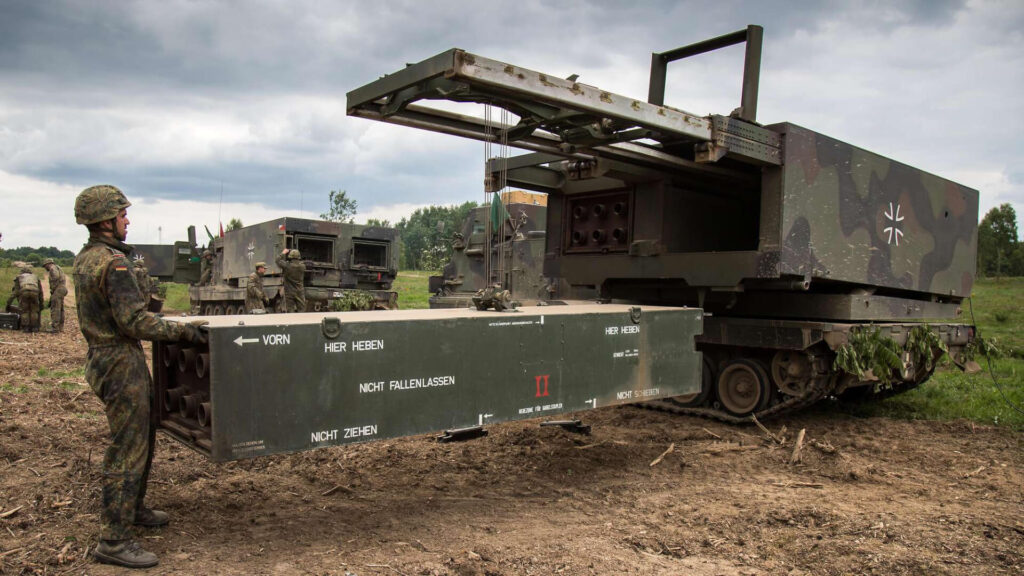
These are essential military supplies for the Ukrainian army, most of which, unfortunately, can only be procured from the US. In light of this, the Ukrainian government has once again increased its needs for the current year from the original $12 billion to $15 billion.
At the same time, most European countries – including Germany – are struggling to find the additional funds needed to procure US military equipment via the PURL mechanism. It therefore remains to be seen how much real impact it will have this year.
If you liked this post, consider following me on X, Bluesky, Telegram or YouTube. If you like, you can also leave me a tip on Ko-fi to support my work.